Our Standard Wallington Workflow, Step by Step
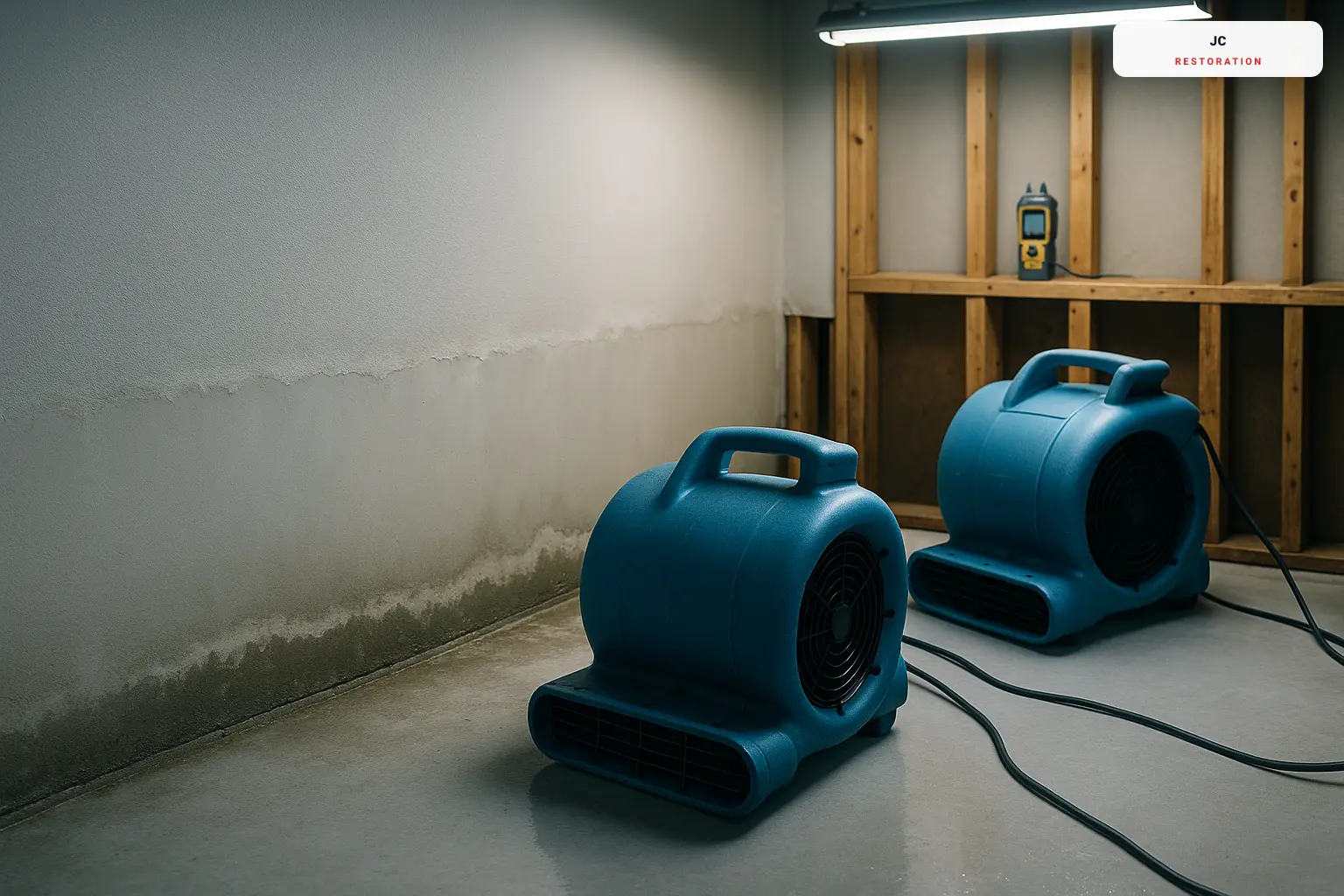
Restoration calls from Wallington come into our Passaic dispatch directly — there is no triage layer between you and the person who decides what equipment ships with the truck. The first call captures address, loss type, severity, and access. By the time the crew is in the driveway they already have the moisture meters, extraction units, dehumidifiers, and containment supplies that match the loss profile.
When the loss is active rather than discovered-after-the-fact, the response is sub-hour arrival anywhere we cover. Pre-positioned equipment and the right crew size for storm season are how we hold that target during surge events. From our Passaic dispatch base, Wallington is about 2 miles out — typically a 10-20 minute drive depending on traffic. During storm windows we pre-stage extraction and drying equipment so the response stays sub-hour even when calls stack up.
Once the truck is parked, the work follows the same pattern every time: source-control (water off, power isolated, containment up), then comprehensive documentation (photos, moisture readings, written cause-of-loss narrative), then sized equipment deployment. Daily monitoring visits with logged readings until every wet substrate returns to baseline. The reconstruction crew is the same team that did the mitigation — same phone number, same contract, same accountability through final walkthrough.
Insurance documentation in Bergen County
What ends up in your carrier file from a Wallington job: a labeled building diagram with daily moisture readings, sequential photographs of every wet substrate at each visit, equipment run-time logs by unit, separate Xactimate scopes for mitigation and reconstruction with line-item pricing, and a written cause-of-loss summary tying the event to the right policy bucket. We bill the carrier directly when assignment is authorized, so out-of-pocket exposure for the homeowner is minimal.